TECHNICAL GUIDE / 2026-10-16
Brown Fused Alumina: 30 Questions Buyers Commonly Ask
When buyers source brown fused alumina from China, the same questions come up again and again — about grades, grit systems, samples, payment and documents. Below are straightforward answers from Luoyang Naibao New Materials Co., Ltd., a producer in Luoyang, Henan. Where an answer depends on your specification, we say so rather than guess.
Grades and Chemistry
1. What grades of brown fused alumina do you produce?
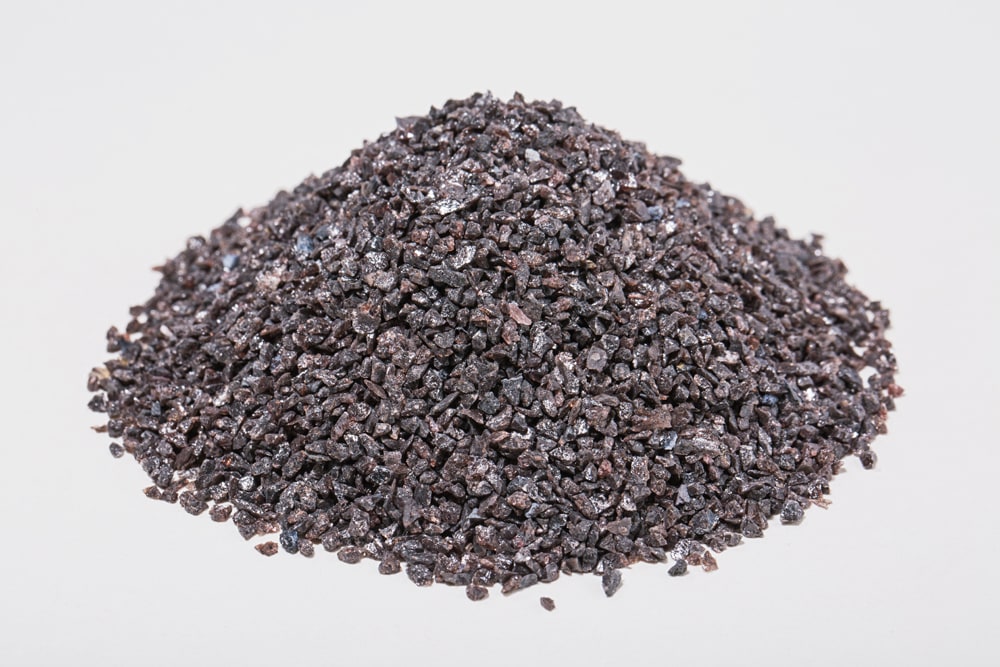
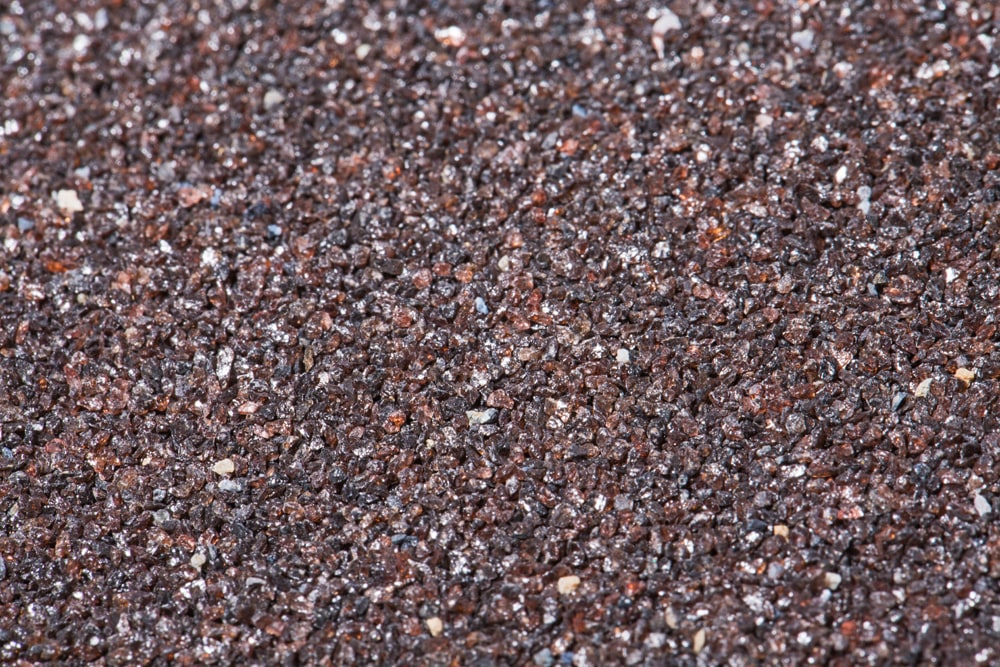
We produce four main grades: 95% Al2O3 from tilting furnaces, with the most consistent chemistry from batch to batch; 94%; 90%; and 75–80% for less demanding uses. We also make refractory fine powders (200F/320F) that can reach 94.5% Al2O3 or above. Higher is not automatically better — tell us the application and we will match the grade, so you do not pay for alumina content you do not need. CHAOYAN is our premium brand.
2. Why is the Al2O3 content only around 93% in fine grits F150–F320?
Around 93% is the normal specification for this size range, not a drop in quality. As grain is crushed and magnetically separated into finer fractions, the composition distributes slightly differently than in coarse grits, and this is standard across the industry. We state the figure openly in the specification before you order, and the batch test report confirms it, so there are no surprises at incoming inspection. Refractory fine powders are a separate product — 200F and 320F can reach 94.5% or above.
3. What is the difference between your 95% and 94% grades?
The 95% grade is smelted in tilting furnaces, which gives more complete melting and the most consistent chemistry from batch to batch — the safer choice for large abrasive plants with tight incoming inspection. The 94% grade, from fixed furnaces, covers most standard applications at a lower cost. Guaranteed impurity limits for either grade are fixed in the agreed specification sheet and verified in the batch test report, rather than quoted loosely in a FAQ.
4. Can you produce to our specification, or match the material we are currently buying?
Yes. Send your current specification sheet, or a sample of the material you buy now, and our lab will check alumina content, chemistry, size distribution and grain shape against it. We will tell you honestly which of our grades matches and where any difference lies, then send our sample for your own testing before you commit to an order.
Grit Sizes and Standards
5. What is the difference between F grits and P grits?
F grits are graded to the FEPA standard and are used mainly for bonded abrasives and blasting; P grits follow the coated-abrasives standard and are made for sandpaper, belts and discs. The letter is part of the specification: an F60 and a P60 do not have the same size distribution and are not interchangeable. See our F grit and P grit ranges for the sizes available.
6. Can F60 replace P60?
Not on the number alone. The two grading systems allow different size distributions, so a direct swap can change coating weight and surface finish on a belt or disc. If you want to switch, we will compare both distributions with you and send a trial sample for a line test before any bulk change.
7. Do you follow FEPA or JIS standards?
Our F and P grits are produced and tested to FEPA standards. If your plant works to JIS or to your own internal standard, send us your acceptance document before ordering — we will produce and inspect against the agreed standard and write it into the specification sheet, so both sides test the same way.
8. How do I convert between mesh, F grit, JIS and microns?
Only approximately. Mesh counts sieve wires, FEPA and JIS grade by particle size distribution, and microns measure size directly, so no conversion is exact — for example, F60 is centred near 250 microns, roughly a 60-mesh cut. Use our F grit to micron converter for a working estimate, then confirm by sample, and let final acceptance rest on the size distribution in the batch test report.
9. What are section grains (0–1, 1–3, 3–5 mm) used for?
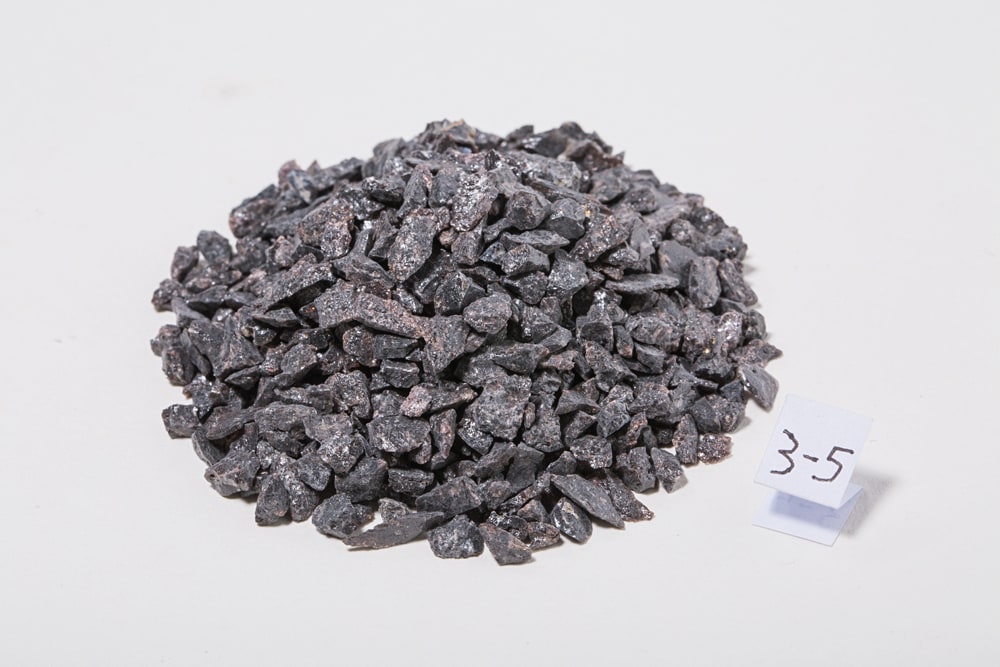
Section grains are millimetre-size fractions used as refractory aggregate — in castables, bricks and furnace linings — rather than as abrasive grain. We supply 0–1, 1–3, 3–5, 5–8, 8–15 and 15–20 mm, normally combined with fine powder as the matrix part of the formulation. Tell us your castable recipe and we will match the fractions.
10. Can you supply Barmac-shaped, ball-milled or shaped grain?
Yes. Beyond standard crushed grain, we offer Barmac impact-shaped grain with a more regular, blocky shape, ball-milled grain, and shaped grain for buyers who specify grain geometry — for example premium wheel makers and blasting users. Grain shape affects cutting behaviour and packing density, so tell us the application and we will recommend the right process. See our special processing options.
Choosing for Your Application
11. Which grade and grit should I use for resin and vitrified grinding wheels?
Bonded wheels use F grits, from F8 to F320 depending on wheel type and the finish required. High-load wheels and plants with strict consistency checks usually take the 95% tilting-furnace grade; high-volume cutting discs commonly run on the 94% or 90% grades. Send us your current specification or workpiece details and we will match a grade and send samples for a wheel test.
12. Which grit sizes are used for sandblasting, and how many times can the media be recycled?
Blasting commonly uses F12–F240, with coarse sizes such as F14 and F16 popular for shipyard and container surface preparation. Brown fused alumina is hard (Mohs 9) and can be recycled, but there is no fixed number of cycles: it depends on your recovery system, air pressure and workpiece, so we do not promise a count. Judge it from a trial in your own system.
13. What do refractory producers buy — section grain only, or also fine powder?
Both, as a set: section-grain aggregate in the millimetre fractions, plus refractory fine powder (200F/320F, Raymond-milled, Al2O3 up to 94.5% or above) for the matrix. For refractories with moderate refractoriness requirements, the 90% grade is a common cost-effective choice. Our refractory grain range covers the aggregate side.
14. Brown or white fused alumina — which should I choose, and do you supply both?
Brown fused alumina is tougher and more economical, and covers most grinding, blasting and refractory work. White fused alumina is purer (about 99% Al2O3) and more friable, preferred for precision grinding and for applications sensitive to iron contamination or colour. On origin, to be clear: we produce brown fused alumina ourselves; white fused alumina we supply from established producers in our region — it is not made in our own furnaces.
Samples
15. Can I get a free sample?
Yes — samples up to 500 g are free. Testing before ordering is our standard path: check the chemistry, size distribution and grain shape in your own lab, or on your own line, first. Tell us the grade and grit size you want to evaluate and we will prepare it.
16. How much does a larger sample cost, and who pays the freight?
For 1–2 kg evaluation quantities we charge a flat USD 10 sample fee; anything larger is handled as a trial order (from 1 ton). Sample freight is paid by the buyer — either freight collect or on your courier account. Once the specification is confirmed we dispatch promptly and send you the tracking number.
Ordering, Payment and Delivery
17. What is your minimum order quantity?
There is no single MOQ across all specifications; quantity is confirmed per grade and grit size. As a working guide, trial orders start from 1 ton, and a full 20-foot container loads about 27 tons. Most new buyers start with a small trial, verify the material, and then move to container loads.
18. What are your payment terms?
100% T/T in advance, for all export customers. We understand advance payment asks for trust, so here is ours: our plant has operated since 1999 and spent over two decades producing material that was exported through China's large trading companies; we hold full customs import and export registration, every batch is documented and traceable, and you are welcome to inspect the plant by video call before you pay.
19. Do you accept L/C or open-account terms?
No — we do not accept letters of credit or 30/60-day open-account terms; advance T/T applies uniformly to every export customer. To reduce your risk, we suggest the sequence most new buyers use: free sample first, then a small trial order, a batch test report with the shipment, and a video factory tour before your first container order.
20. What is your lead time?
For full container orders, production and delivery to the loading port take about 7 days. Trial orders and mixed LCL shipments need about 10–15 days, because several grit sizes are consolidated into one shipment. Vessel schedule delays after the goods reach the port are not counted in our lead time.
21. Which ports do you ship from?
Mainly Tianjin; Qingdao is also available. Our plant is in Luoyang, Henan, and we arrange the inland transport to the port. If you need a CIF quotation, tell us your destination port and we will include the ocean freight in the offer.
22. What packing options do you offer — and can you use our own bags?
Standard packing is 25 kg bags or jumbo (ton) bags; options include pallets, stretch film, 20 kg paper bags on pallets, paper tubes and steel drums, confirmed per order. We also accept buyer-supplied bags — a model we used for years when producing for trading companies: you send the bags, we fill them.
23. Why don't you publish prices — and what do you need from me to quote?
Because a list price would mislead: the same grit size prices differently by grade, quantity, packing and destination port. Send five things — grade (Al2O3 level), grit size, quantity, packing and destination port — and we will quote a real factory price against your actual specification instead of a generic table.
24. What affects the price of brown fused alumina?
Grade and furnace type (the tilting-furnace 95% grade carries a consistency premium), grit size, packing extras such as pallets or paper bags, and quantity — container loads versus trial lots. One structural factor: we export compliantly, with 13% VAT inside the cost chain, so our quotations are not directly comparable with offers that bypass tax through buying-agent export channels. We explain the logic openly; exact prices are quoted per specification, never published.
Quality and Documents
25. What quality documents come with an order?
Each batch can be supplied with a batch test report covering the chemistry and size distribution agreed in your specification, and every batch is traceable end to end. An English PDS is published on each product page, and an SDS for the specific grade can be provided on request — documents matched to the grade you buy, not generic sheets.
26. Do you hold ISO quality certification?
No, we do not hold ISO certification, and we will not imply otherwise. What we offer instead is verifiable: a batch test report with every batch, acceptance against an agreed specification sheet, samples before ordering, and a plant you can inspect in person or by video. For many buyers, that combination answers the question certification is meant to ask.
About the Company
27. How long have you been exporting?
The material itself has been exported for over twenty years — for most of that time produced by us and exported through Chinese trading companies, including Baige Import & Export and China National Abrasives Import & Export Corporation, into Turkey, Russia, Japan, Korea, Thailand, India and Europe. Our own direct export business is new — it started in 2026 — and we keep the two facts separate rather than dress the trading-company years up as our own export record.
28. Can I see how the material is produced before I order?
Yes. Our website carries an interactive 3D tour of the full production process — smelting, cooling, crushing, shaping, magnetic separation and screening, from bauxite to finished grain — which you can scroll through on a phone or computer. With a concrete order in view we can also arrange a live video tour of the plant, and on-site visits are welcome by appointment.
29. How should brown fused alumina be stored after delivery?
Store it indoors and dry, and keep bags sealed until use; the material itself is chemically stable and does not expire. Keep bags off the floor on pallets and away from standing water. If bags do get wet, dry the grain before use so moisture does not affect bonding or flow.
30. How do I place an order?
Send an inquiry with the five parameters listed in question 23. We confirm the specification with you and issue a quotation; once price and terms are agreed, we send a proforma invoice, you remit the T/T payment, and we schedule production, packing and shipment, with the batch test report and shipping documents following the goods. You can start on our contact page.
Not sure which grade or grit fits your line? Send your current specification — or just your application and workpiece — through our contact page, and we will recommend a grade and a sample plan.